Well Casing Explained: Steel vs PVC and Why Depth Matters
Well casing is the pipe that lines a drilled well. It holds the borehole open, keeps surface water and contaminants out, and protects the pump inside. Most residential well casing is steel or PVC. The right material and depth depend on the ground your well passes through and on New Jersey's well construction code.
Casing is one part of your well you'll probably never see, yet it decides how clean and dependable your water stays for decades. At Robbins Water Service, we install and service wells across South Jersey every week. Here's what homeowners should understand about casing materials, depth and the rules behind them.
🎯 Key Takeaways
- Casing holds the borehole open, keeps surface water out and houses the pump.
- NJ requires steel casing in bedrock; PVC is allowed in sand and gravel and resists acidic water.
- NJ bedrock wells need at least 50 ft of steel casing, with 20 ft set into unweathered rock.
- Grout seals the annular space so runoff can't travel down the outside of the casing.
- Casing must stand at least 12 inches above grade with a vented sanitary cap.
In This Guide
What Is Well Casing and Why Does Your Well Need It?
Casing is the backbone of a drilled well. Without it, a well can't stay open and it can't stay clean. It does three jobs at once.
Holding the Borehole Open
South Jersey wells are drilled through loose sand, gravel and clay. Left unsupported, those materials would collapse into the hole. The casing forms a solid wall from the surface down to the water-bearing layer, so the well keeps its shape for its whole working life.
Keeping Surface Water and Contaminants Out
Rainwater, runoff and shallow groundwater can carry bacteria, fertilizers and debris. Casing, the grout sealed around it and a tight well cap work together to block that water from reaching your supply. To see where casing fits in the bigger picture, read our guide on how a well water system works.
Housing the Pump and Water Line
A submersible pump hangs inside the casing, and the water line leaves through a pitless adapter fitted into the casing wall below the frost line. If the casing is damaged, the pump and wiring are exposed too. That's why casing condition matters during well pump repair.
Steel vs PVC Well Casing: Which Is Better?
Neither material is better everywhere. The right choice depends on the geology the well passes through and on the chemistry of your water.
Steel Well Casing
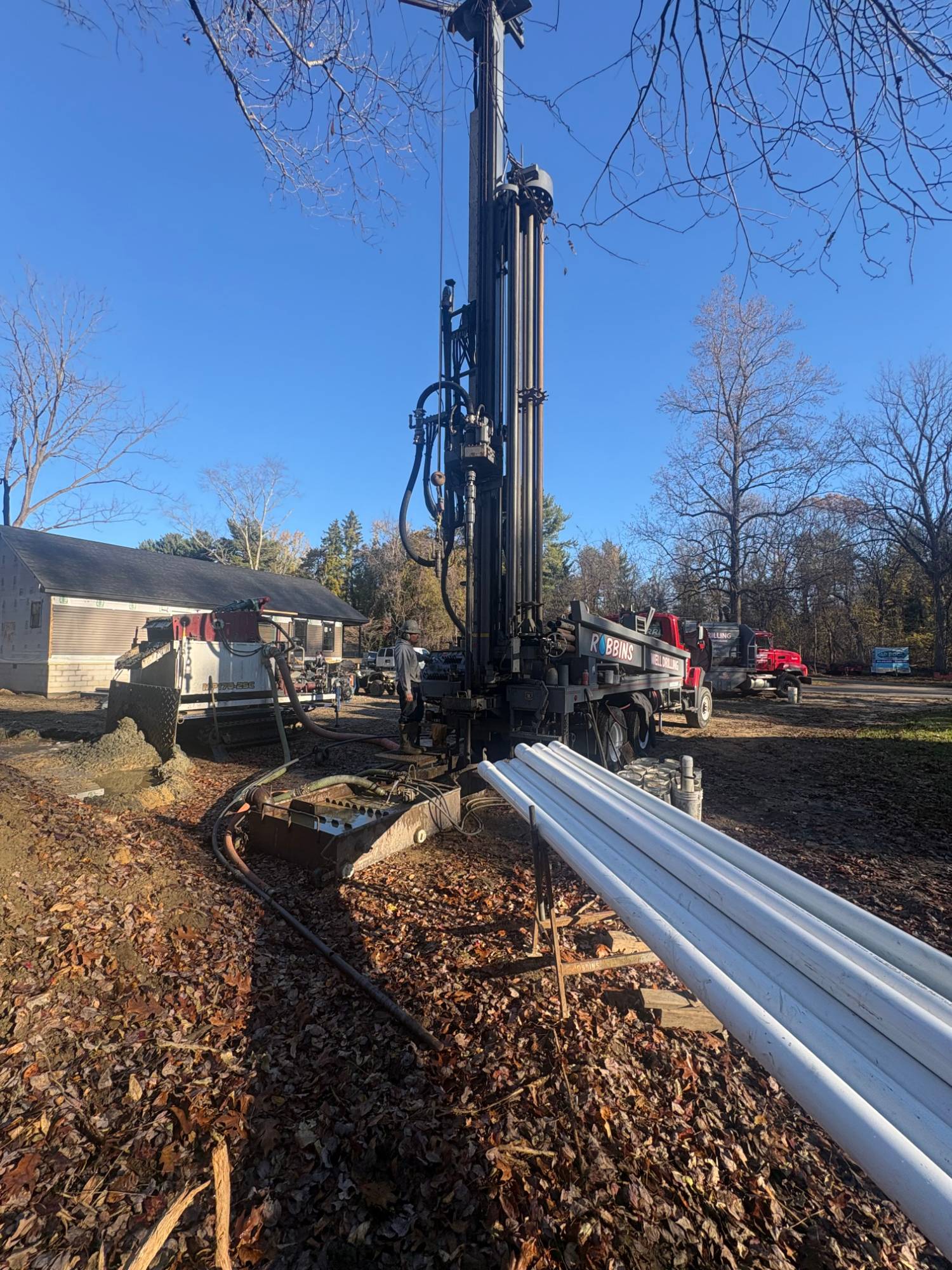
Steel casing is strong and rigid, and it can be driven into the ground. New Jersey requires steel casing in consolidated (bedrock) formations, where the casing must seat firmly into rock. The trade-off is corrosion. Over many years, steel can rust, especially when it sits in acidic or highly oxygenated water.
PVC (Thermoplastic) Well Casing
PVC casing doesn't rust and isn't affected by low pH water. New Jersey only allows plastic casing in unconsolidated formations like sand and gravel. It can't be driven, and it must meet ASTM F480 and NSF Standard 14 for drinking water use. Because it's lighter and less rigid than steel, it has to be installed and grouted carefully.
Which Material Fits South Jersey Wells?
Most of South Jersey sits on the Coastal Plain, a region of unconsolidated sands where both materials can be permitted. Much of the area's groundwater, including water from the Kirkwood-Cohansey aquifer, is naturally acidic, so corrosion resistance is a real consideration. An experienced driller weighs your site's geology, well depth and water chemistry before choosing. If your water tests acidic, our water treatment systems can protect your plumbing as well.
How Deep Does Well Casing Go?
Casing depth is set by geology and state code, not guesswork. It's one of the biggest factors in long-term water quality.
Casing in Sand and Gravel Formations
In unconsolidated formations, the casing runs down to the water-bearing sand layer. A well screen at the bottom lets water in while holding back sand. The screen must sit in a productive layer, so the casing depth follows the aquifer, not a fixed number.
Casing in Bedrock Wells
For bedrock wells, New Jersey requires at least 50 feet of steel casing, with a minimum of 20 feet set into unweathered rock. The casing must also be at least six inches in inside diameter. This anchors the casing in solid rock and seals off the fractured, weathered zone above it.
Why Deeper Casing Protects Water Quality
Shallow groundwater responds quickly to what happens at the surface, such as septic systems, lawn chemicals and stormwater. Casing that reaches deeper, better-protected water reduces that risk. It's one reason why choosing professional well drilling matters more than finding water as cheaply and quickly as possible. You can see where casing goes in at each stage in our guide to the water well drilling process.
What Is Well Grouting and Why Does It Matter?
There is always a gap between the outside of the casing and the borehole wall, called the annular space. Unless it's sealed, it becomes a direct path for contamination.
What Grout Does
Grout is a cement or bentonite clay mixture pumped or placed into the annular space. Once it sets, it locks the casing in place and stops surface water from running down the outside of the pipe into the aquifer.
How New Jersey Requires Grouting
New Jersey's code sets approved grouting methods, requires potable water for mixing grout, and requires the grout to be brought up to ground level or to the pitless adapter. If the grout settles, the driller must return within a set window to top it off. These steps are easy to skip on a rushed job, which is why they're worth asking about.
Signs of a Poor Seal
Water that turns cloudy or tests positive for bacteria after heavy rain often points to a sealing problem. That pattern means surface water is finding a way in, so it should be inspected rather than just treated.
How High Should Well Casing Be Above Ground?
The part of your well you can see matters as much as what's underground.
The 12-Inch Rule in New Jersey
Under N.J.A.C. 7:9D-2.3, well casing must extend at least 12 inches above grade, with a screened, downward-facing vent. The ground around the wellhead should slope away so rainwater drains off instead of pooling at the casing.
Buried or Cut-Off Casings
Older wells sometimes have casings that were cut below grade or buried during landscaping. A buried wellhead can flood and pull contaminated water straight into the well. In most cases, the fix is to extend the casing and fit a proper sanitary cap.
How Do You Know If Well Casing Is Damaged?
Casing problems usually show up in your water before you can see anything wrong at the wellhead.
Sand, Sediment or Cloudy Water
A sudden increase in sand or grit can point to a cracked casing, a failed joint or a damaged screen. Sand also wears out pumps quickly, so it shouldn't be ignored.
Water Quality Changes After Storms
Water that smells, tastes or tests differently after heavy rain suggests surface water is getting past the casing or grout seal. Retest, and have the well inspected.
Visible Cracks, Rust or Damage at the Wellhead
Check the exposed casing for cracks, heavy rust, a loose cap or mower damage. A well camera inspection can show the condition of the casing below ground. Some problems can be repaired. A badly failed well may need to be properly sealed and replaced. If your water stops entirely, start with our guide on why your well may have suddenly stopped working.
Final Thoughts
Well casing works quietly, but its material, depth and grout seal decide how well your well holds up over the years. Steel and PVC each have a place, and New Jersey's code sets clear rules for both. If you're planning a new well or have concerns about an older one, call Robbins Water Service at 609-268-2040. If you're comparing contractors, our guide on how to choose a well driller in New Jersey is a helpful place to start.
Frequently Asked Questions
What is the purpose of well casing?
It lines the borehole so the well doesn't collapse, and it keeps surface water and contaminants out of your drinking water.
Is steel or PVC well casing better?
It depends on geology. New Jersey requires steel in bedrock, while PVC is allowed in sand formations and resists acidic water.
How deep does well casing go?
Down to the water-bearing layer. NJ bedrock wells need at least 50 feet of casing, with 20 feet set into solid rock.
How high should a well casing stick up?
In New Jersey, at least 12 inches above the ground, with the soil sloping away from the wellhead.
Can well casing be repaired?
Damage near the top can often be repaired or extended. Serious cracks or corrosion may mean the well needs to be sealed and replaced.
Worried About an Old or Buried Well Casing?
We inspect casings (including down-hole video), extend buried wellheads, seal failed wells and drill code-compliant replacements across South and Central Jersey.
Phone: 609-268-2040 · Mon–Fri 7:30–4:30, emergency service on weekends
Location: 146 Stokes Road, Shamong, NJ 08088
About Robbins Water Service
Family-owned and operated since 1910 in Shamong, NJ, Robbins Water Service is a team of NJ Licensed Master Well Drillers, NGWA certified, a Grundfos Authorized Dealer and a Franklin Electric Certified Contractor. Every job is done by our own employees, never subcontractors. We handle well drilling, well pump and tank repair, geothermal and water treatment across Burlington, Atlantic, Gloucester, Ocean and Monmouth counties.