Is Geothermal Heating and Cooling Right for Your New Jersey Home?
Energy bills across New Jersey keep climbing higher and higher. Homeowners are exploring geothermal heating and cooling as a way to slash costs while staying comfortable year-round. But is it the right choice for your home?
Since 1910, Robbins Water Service has helped South and Central New Jersey homeowners make smart decisions about heating, cooling, and water systems. As licensed Master Well Drillers with over a century of local experience in Burlington County, Atlantic County, Gloucester County, and many more, we know what works and what doesn't.
This guide answers your most important questions about geothermal systems, from how they work to what they cost.
🎯 Key Takeaways
- Energy Savings: 30-60% lower bills vs. traditional systems
- Cost: $30,000-$60,000 total installation
- Payback: 5-10 years through energy savings
- Lifespan: 50+ years for loops, 20-25 for heat pump
- Best For: Homeowners staying 5-10+ years
In This Guide
- What Is Geothermal Heating and Cooling?
- What Are the Types of Geothermal Systems?
- What Are the Benefits of Geothermal?
- How Much Does Geothermal Cost in New Jersey?
- How Long Does Installation Take?
- How Long Do Geothermal Systems Last?
- What Should You Consider Before Installing?
- Is Geothermal Worth It?
- Why Choose Robbins Water Service?
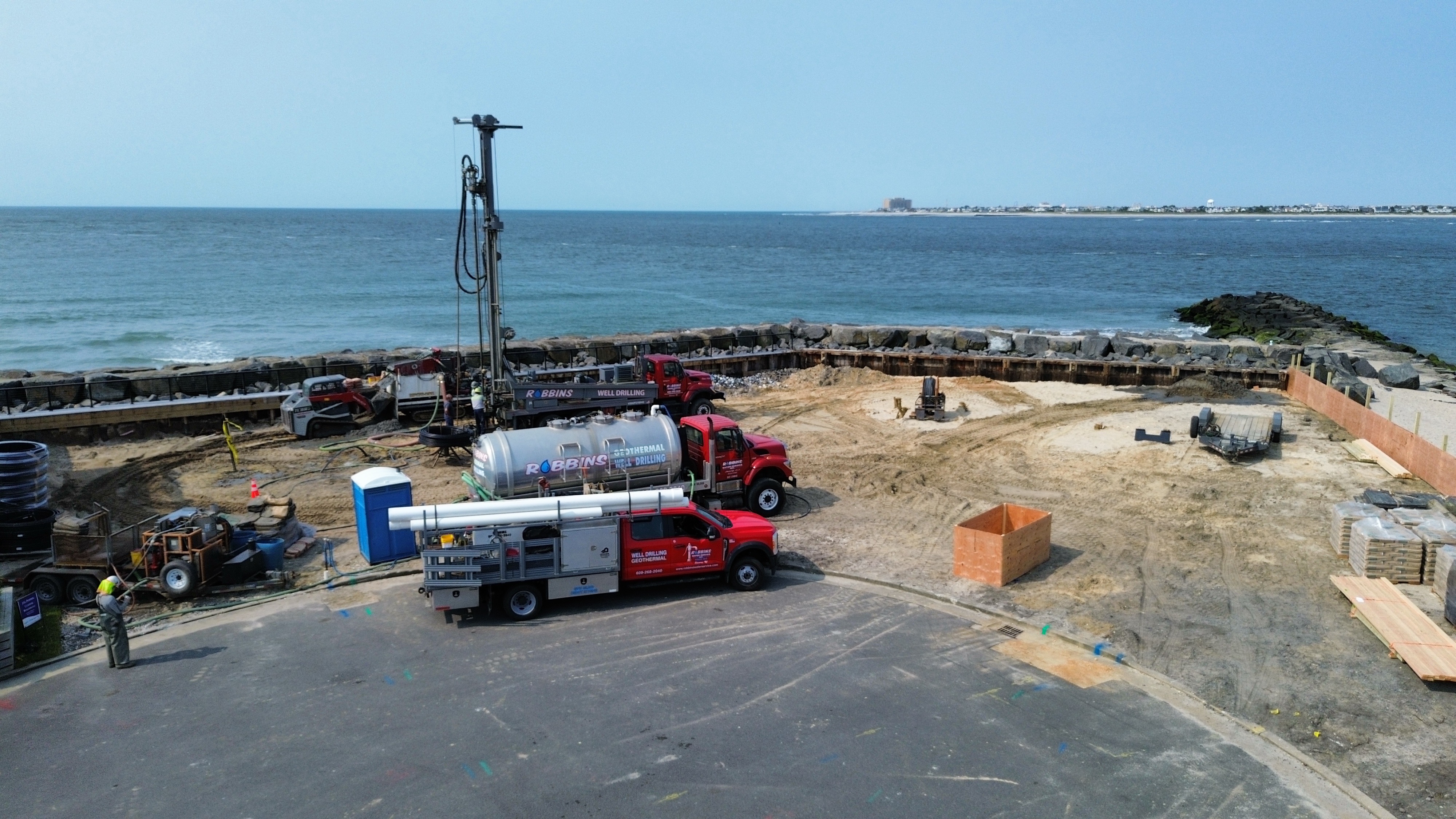
Equipment set-up for drilling a closed-loop geothermal system
What Is Geothermal Heating and Cooling?
Geothermal systems use the earth's constant 50-60°F underground temperature to heat and cool buildings efficiently. Underground pipes circulate fluid that absorbs heat from the ground in winter or deposits heat into the ground in summer.
Here's the simple version: Instead of creating heat by burning fuel or fighting extreme outdoor temperatures, geothermal moves existing heat to where you need it. This transfer process uses far less energy than conventional heating and cooling.
When we drill wells and install loop systems of underground piping. We use a water-based solution that is circulated continuously through the piping. Absorbing warmth in winter, and depositing heat in summer. A heat pump inside your building then distributes the conditioned air throughout your space.
What Are the Types of Geothermal Systems?
There are two main types: closed-loop and open-loop systems.
Closed-Loop Systems (most common for new residential installs):
A sealed network of pipes circulates a water-antifreeze mixture continuously. Closed-loop can be installed vertically (drilled deep) requiring less room then horizontal systems (trenched across your property).
Open-Loop Systems:
Pumps groundwater from a well, extracts thermal energy, then returns water to the aquifer through a return well. Highly efficient with adequate, clean groundwater.
Which system works best depends on your lot size, soil conditions, water table, and local regulations. With 114 years of drilling experience in South Jersey geology, we can evaluate your property and recommend the right approach.
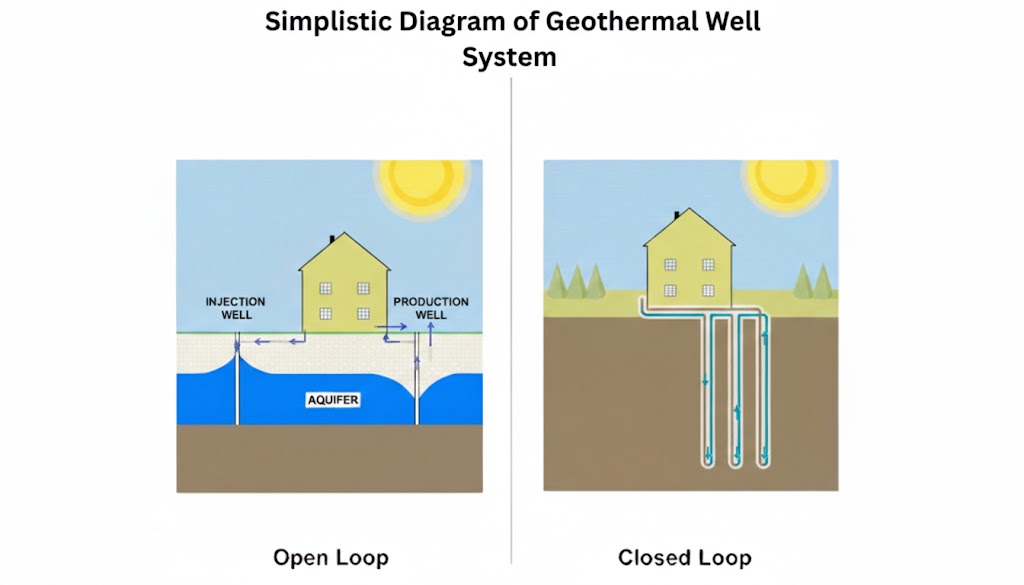
Open-Loop System vs Closed-Loop System Design
What Are the Benefits of Geothermal?
- Energy savings of 30-60% vs. traditional oil, propane, or electric systems
- Exceptional lifespan: underground loops last 50+ years, heat pumps 20-25 years
- One system handles both heating and cooling year-round
- Minimal maintenance with fewer mechanical components
- Quiet operation with equipment mostly underground
- Zero direct emissions and improved indoor air quality
- Lower long-term costs despite higher upfront investment
For New Jersey homeowners, that 30-60% savings often translates to $1,500-$3,000+ in annual energy bill reductions. The system moves heat rather than creating it, requiring just 1 unit of electricity to move 3-4 units of heat energy.
How Much Does Geothermal Cost in New Jersey?
Total installation: $30,000-$60,000 for an average sized residential system (drilling, equipment, installation).
The good news: Most homeowners recoup this investment in 5-10 years through energy savings.
Cost Factors:
- System size (based on your heating/cooling needs)
- Loop type (vertical, horizontal, or open-loop)
- Soil and geological conditions
- Property space available for drilling
- Existing ductwork condition
Return on investment: With $1,500-$3,000 annual savings depending on sizing of the location, payback typically occurs within 5-10 years. After that, you enjoy lower energy bills for decades.
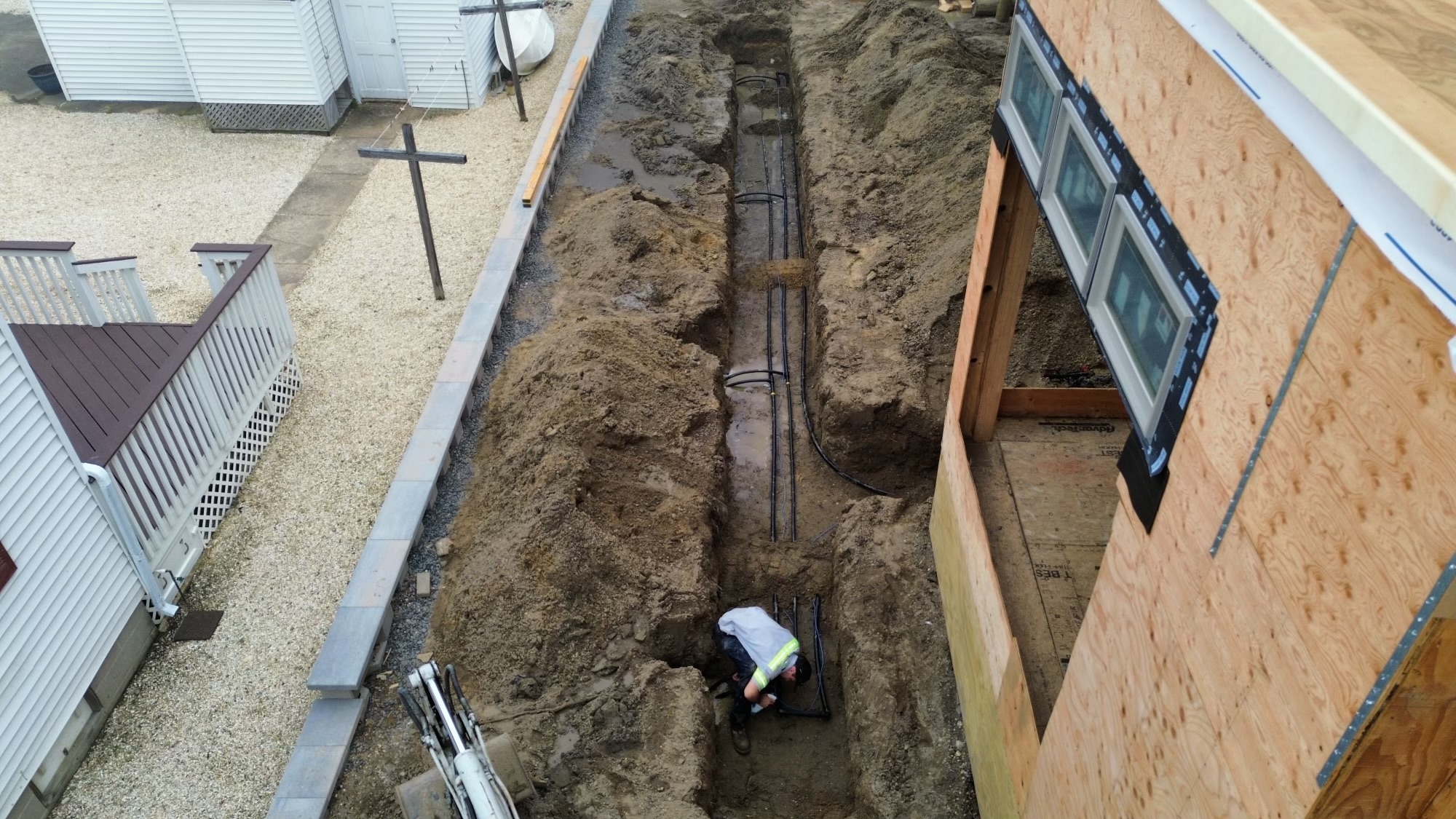
Residential closed-loop geothermal system showing underground manifold
How Long Does Installation Take?
Timeline: 1-2 weeks total
- 3-5 days for drilling and loop installation
- 1-2 days for heat pump installation and connection
New construction is typically faster than retrofits. Our modern equipment and experienced team work efficiently to deliver fast, high-quality results.
How Long Do Geothermal Systems Last?
Underground loops: 50+ years
Heat pump: 20-25 years
This far exceeds traditional furnaces and AC units (15-year average). The underground piping is virtually maintenance-free. You may replace your heat pump once or twice in your lifetime, but the loop could serve your home for half a century or more.
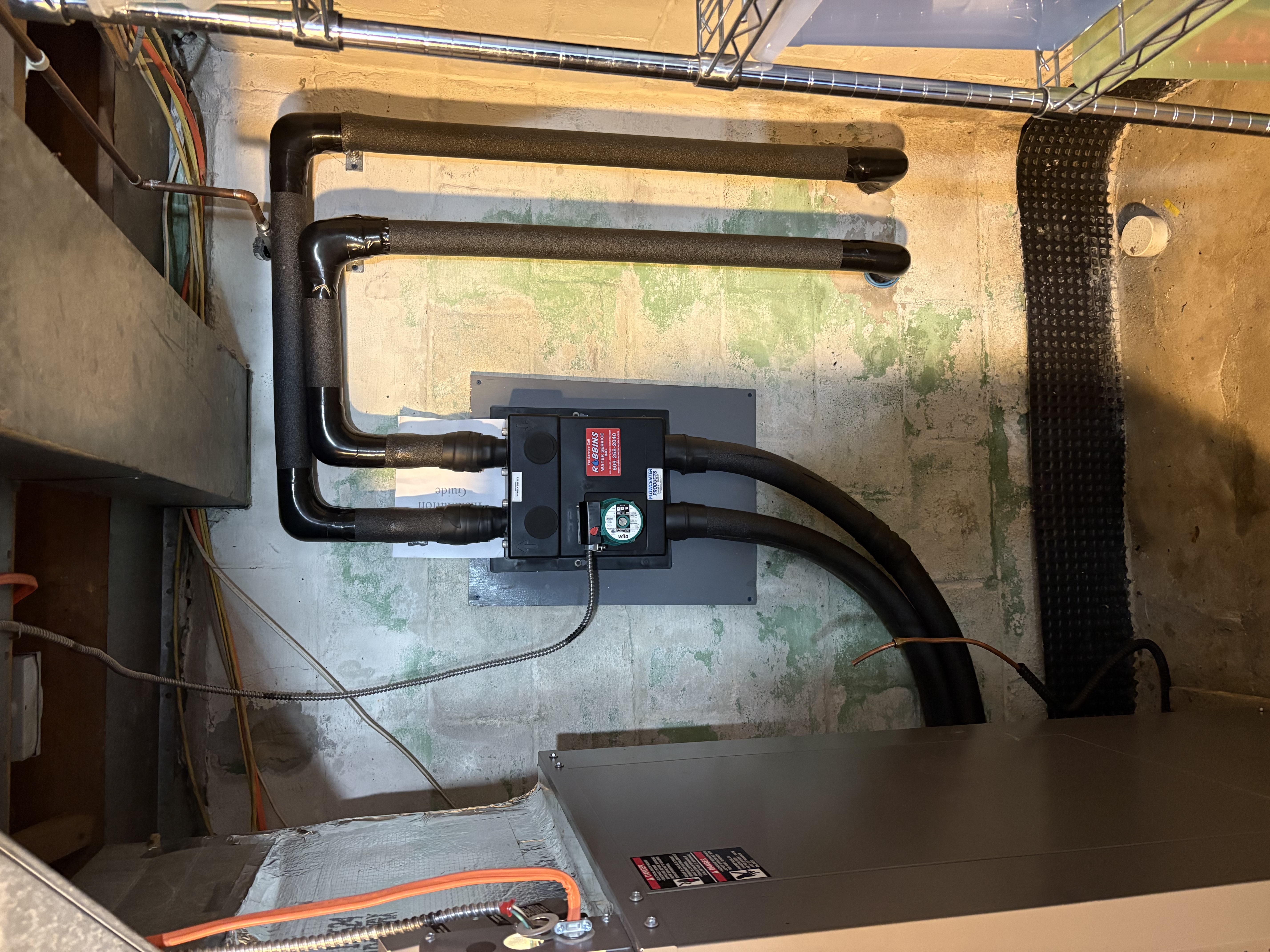
Small residential closed-loop geothermal system showing fluid pump
What Should You Consider Before Installing?
Key considerations:
- Higher upfront cost (offset by tax credits and long-term savings)
- Adequate property space for drilling or trenching
- 5-10 year stay in your home to see full ROI
- Experienced contractor with both drilling and geothermal expertise
Property requirements vary by system type. Vertical systems need less surface area but must be drill 150-400 feet deep. Horizontal systems need a lot more yard space but don't need to be drilled. Our South Jersey expertise helps us assess your property honestly and recommend the best system for your situation.
Is Geothermal Worth It?
Yes, if you:
- Plan to stay in your home 5-10+ years
- Currently heat with expensive oil, propane, or electric
- Are you building new or replacing an aging HVAC system
- Have adequate property space
- Value long-term savings over lower upfront cost
With 30-60% energy savings and a 50+ year lifespan, most homeowners see positive ROI within a decade. The combination of occasional federal tax credits, energy savings, and minimal maintenance makes geothermal one of the smartest long-term home investments.
Why Choose Robbins Water Service?
114 Years of South Jersey Experience: We started as J. Henry Robbins Artesian Well Drilling in 1910. Four generations later, we're still family-owned and based in Shamong, serving our neighbors throughout the region.
Deep Local Knowledge: We know the soil composition, water tables, and geological patterns of Burlington, Atlantic, and Gloucester Counties intimately. This means accurate cost estimates and realistic timelines--no surprises.
Licensed Master Well Drillers: We hold New Jersey's highest well drilling license category, demonstrating our commitment to professional excellence and strict adherence to state regulations.
Complete In-House Service: From permits to drilling to installation to maintenance, we handle everything. One company, one team, one point of contact for decades of service.
Ready to Explore Geothermal?
Phone: 609-268-2040
Location: 146 Stokes Road, Shamong, NJ 08088
We'll assess your property and provide a straightforward, honest recommendation and quote. No pressure, no obligation.
About Robbins Water Service
Family-owned and operated since 1910, Robbins Water Service holds New Jersey's highest well drilling license category (Master Well Driller). We specialize in residential and commercial well drilling, geothermal systems, well and pump repair, and water treatment throughout all of south and central New Jersey.